Blog
Budgeting a Commercial Gym: Where to Spend vs. Save

Published July 6, 2026
Building a commercial gym is a major capital investment, but spending more doesn’t always mean creating a better facility. The most successful gym owners know where premium equipment delivers a return and where standard options can help control costs without sacrificing the member experience.
This guide breaks down where to invest, where to save, and how to build a gym that performs for both members and your bottom line.
Spend: High-Quality Cardio Equipment
Why it matters
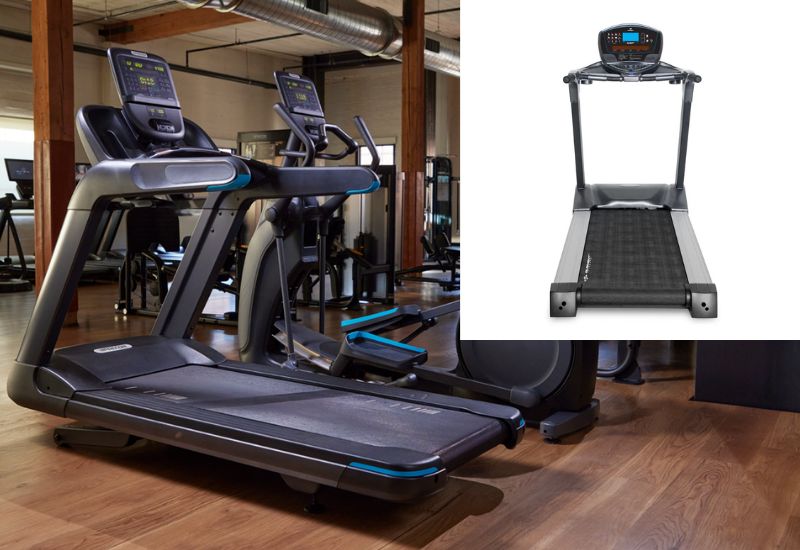
Cardio equipment is typically the hardest-working equipment in a facility. Treadmills, ellipticals, bikes, and stair climbers contain motors, electronics, moving components, and touchscreens that endure constant use.
Industry sources consistently note that commercial-grade cardio equipment offers longer service life and lower lifetime maintenance costs than light-commercial alternatives. Commercial treadmills commonly last 7–10 years when properly maintained, while lower-grade equipment often requires replacement much sooner.
Key takeaway
A premium treadmill may cost more upfront, but:
- Reduced downtime improves member satisfaction.
- Fewer repairs lower operating expenses.
- Longer lifespan improves total cost of ownership.
Bottom line: Spend on commercial-grade cardio equipment and think in terms of lifetime cost rather than purchase price.
Save: Choose Standard Finishes Instead of Custom Colours
Why it matters
Many manufacturers offer custom frame colors, custom upholstery, logo embroidery, and branded finishes. While these options can create a unique aesthetic, they often come with additional costs and longer lead times. Several manufacturers specifically note that custom colors and branding options are available as premium upgrades.
Smart budgeting tip
For most commercial gyms:
- Black frames
- Black upholstery
- Standard manufacturer finishes
provide a clean, professional appearance while avoiding customization expenses.
Key takeaway
Members rarely choose a gym because a leg press has custom upholstery. Invest in equipment quality first and aesthetics second.
Bottom line: Save money by sticking with standard black-on-black equipment unless branding is a critical differentiator.
Spend: Versatile Equipment That Supports Multiple Exercises
Why it matters
Some equipment serves a single purpose, while other pieces support dozens or even hundreds of exercise variations.
Examples include:
- Squat racks
- Functional trainers
- Dumbbell systems
- Adjustable benches
- Multi-station training rigs
Industry experts consistently recommend multifunctional equipment because it maximizes floor space and supports a wider variety of training styles. Functional trainers in particular are frequently cited as one of the most space-efficient investments available.
Key takeaway
One versatile piece of equipment can often replace several specialized machines.
Bottom line: Prioritize equipment that serves multiple users, training goals, and exercise types.
Save: Incorporate Open Space Instead of Filling Every Square Foot
A common mistake
Many gym owners believe every available area must contain equipment.
In reality, open training areas have become increasingly valuable as functional fitness continues to grow in popularity. Functional spaces support:
- Stretching
- Mobility work
- Core training
- Group training
- Sled work
- Bodyweight exercises
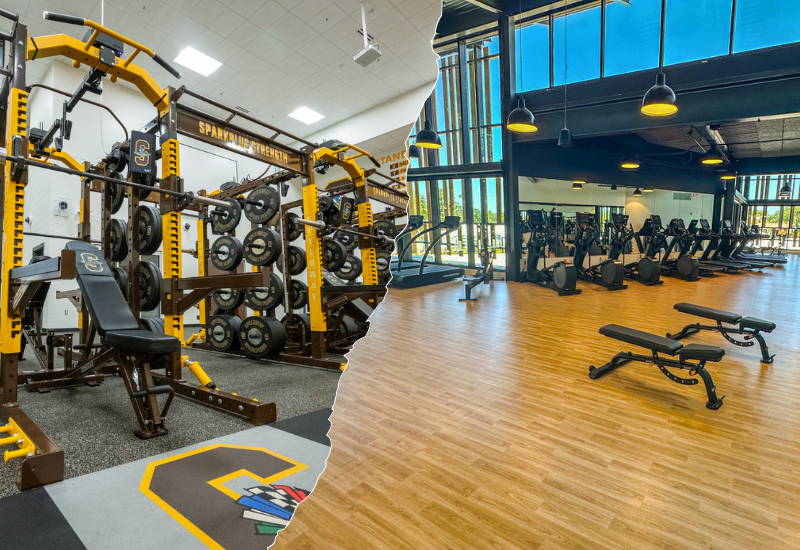
Industry gym design recommendations frequently allocate dedicated open functional-training zones because they increase flexibility and member engagement while requiring significantly less equipment investment.
Additional benefit
Every machine you don’t buy:
- Reduces initial capital costs
- Lowers maintenance expenses
- Preserves flexibility for future growth
Bottom line: Don’t confuse an effective gym with a crowded gym. Strategic open space can improve the member experience while reducing costs.
Spend Time Up Front to Save Money Later
Nail the equipment selection
One of the most expensive mistakes a facility can make is purchasing equipment that members rarely use.
Equipment selection should be based on:
- Member demographics
- Training preferences
- Available space
- Programming goals
Industry guidance consistently recommends surveying members and aligning equipment purchases with actual usage patterns. Equipment that sits empty ties up capital, occupies valuable floor space, and generates little return on investment.
Questions to ask before purchasing
- Will multiple members use this every day?
- Does it support current fitness trends?
- Does it complement existing equipment?
- Could a more versatile option provide similar benefits?
Bottom line: The most expensive equipment isn’t necessarily the best investment. The best investment is the equipment members actually use.
Spend Time Up Front to Save Money Later
Nail the equipment selection
One of the most expensive mistakes a facility can make is purchasing equipment that members rarely use.
Equipment selection should be based on:
- Member demographics
- Training preferences
- Available space
- Programming goals
Industry guidance consistently recommends surveying members and aligning equipment purchases with actual usage patterns. Equipment that sits empty ties up capital, occupies valuable floor space, and generates little return on investment.
Questions to ask before purchasing
- Will multiple members use this every day?
- Does it support current fitness trends?
- Does it complement existing equipment?
- Could a more versatile option provide similar benefits?
Bottom line: The most expensive equipment isn’t necessarily the best investment. The best investment is the equipment members actually use.
Conclusion
When budgeting a commercial gym, focus on value rather than volume.
Spend on:
- Commercial-grade cardio equipment
- Versatile strength equipment
- Equipment your members actually want
Save on:
- Unnecessary customization
- Excess specialty machines
- Filling every square foot with equipment
A thoughtful equipment strategy creates a facility that delivers a better member experience, lower operating costs, and stronger long-term returns.