Blog
Commercial vs. Consumer Fitness Equipment: Why the Price Difference Matters

Published August 25, 2026 · Last updated September 3, 2026
One of the questions we hear from condominium boards, developers, hotels, and organizations planning a fitness facility is:
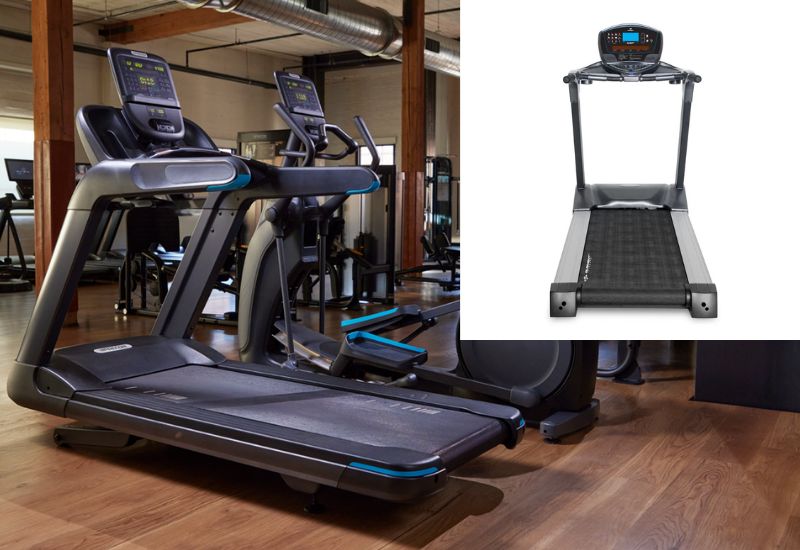
“Why does that treadmill cost $7,000 when I’ve seen one on sale for $1,500?”
It’s a fair question.
To someone comparing two treadmills on a screen, the price difference can seem difficult to justify. After all, both appear to do the same thing: they move a belt, track a workout, and allow someone to walk or run.
The reality is that commercial and consumer fitness equipment are built for very different environments.
Understanding that difference can help facility operators make more informed decisions and avoid costly surprises down the road.
Two Big Differences
Hours of Use
A treadmill in a home gym might be used by one or two people a few times per week.
A treadmill in a condominium fitness centre, corporate gym, recreation facility, or hotel may be used dozens of times each day by people of varying ages, fitness levels, and training styles.
That level of usage changes everything.
Commercial equipment is designed to withstand continuous operation for years. Frames are typically heavier, motors are more robust, components are designed for repeated use, and overall construction is intended for high-traffic environments.
Consumer equipment is built for convenience and affordability in a residential setting.
Neither is inherently better. They’re simply designed for different purposes.
A Wider Range of Users
A home treadmill is typically used by a small number of people who understand the equipment, become familiar with its features, and have a personal interest in keeping it in good condition.
Commercial fitness equipment operates in a very different environment.
In a condominium gym, hotel fitness centre, corporate facility, or recreation centre, equipment is used by people with varying levels of experience, fitness backgrounds, and familiarity with exercise equipment. Some users will treat the equipment carefully. Others may use it incorrectly, accidentally misuse it, or place demands on it that were never intended in a residential setting.
Commercial equipment must be designed to handle these real-world conditions.
That could mean everything from repeated impacts on consoles and controls, to exposure to sweat and spilled drinks, to users entering the facility with dirty footwear, to equipment being used for exercises beyond its primary purpose.
Just as importantly, commercial equipment must accommodate a much wider range of body types, fitness levels, and usage patterns.
A treadmill in a home gym may be used by the same one or two people for years.
A treadmill in a commercial facility may be used in the same day by:
- A 90-pound endurance runner
- A 160-pound recreational exerciser
- A 250-pound strength athlete
- A 310-pound walker beginning a fitness journey
Each user places different demands on the equipment.
Designing a treadmill that performs reliably, safely, and comfortably across this broad range of users requires heavier-duty components, stronger frames, more robust motors, and higher engineering standards than equipment designed for residential use.
Commercial equipment isn’t simply built to last longer.
It’s built to perform consistently for a much more diverse population of users.
Purchase Price vs. Lifecycle Cost
When evaluating equipment, many buyers focus on the initial purchase price.
Experienced facility operators tend to focus on something else:
The total cost of ownership.
The purchase price is only one part of the equation.
Over the life of a piece of equipment, operators may also experience:
- Maintenance costs
- Equipment downtime
- Replacement parts expenses
- User complaints
- Lost accessibility to popular equipment
- Premature replacement
A lower-cost piece of equipment may appear attractive during procurement but become significantly more expensive when it requires frequent repairs or replacement.
The goal isn’t necessarily to buy the lowest-priced equipment.
The goal is to make the most cost-effective decision over the lifespan of the facility.
Serviceability Matters More Than Most People Realize
One of the biggest differences between commercial and consumer equipment is serviceability.
Commercial manufacturers understand that their equipment will eventually require maintenance and repairs. As a result, equipment is often designed with service access in mind.
Components can be replaced. Parts can be ordered. Technicians can be trained and certified.
In a commercial environment, this matters.
When a piece of equipment is out of service, the impact extends beyond the repair itself. Facility managers must respond to complaints; users lose access to equipment, and the overall experience can suffer.
Equipment that can be repaired efficiently often provides significantly greater long-term value than equipment that must be replaced when major components fail.
Replacement Parts Availability
Another important consideration is parts support.
A common challenge with lower-end equipment is that replacement parts may become difficult or impossible to source after only a few years.
This creates a frustrating situation for facility operators.
The equipment itself may still be structurally sound, but a failed component can render the entire unit unusable if replacement parts are unavailable.
Commercial manufacturers typically maintain parts inventories and support networks for much longer periods, allowing facilities to keep equipment operating well beyond the initial warranty period.
When purchasing for a condo fitness centre, hotel, or corporate gym, parts availability should be viewed as part of the investment.
Reliability Affects User Experience
Most facility users never ask what a treadmill costs.
They notice whether it works.
Consistent equipment availability contributes to user satisfaction, while repeated outages can create frustration and negatively impact perceptions of the facility.
This is particularly important in smaller fitness centres where each piece of equipment represents a larger percentage of total capacity.
When one of three treadmills is unavailable, users notice.
When one of ten treadmills is unavailable, the impact is smaller.
Reliability is not just a maintenance consideration. It’s an experience consideration.
Risk Management Is Part of the Decision
When evaluating fitness equipment, most discussions focus on budget, durability, or maintenance.
Another important consideration is risk management.
Commercial fitness equipment is specifically designed, tested, and warranted for use in commercial environments such as condominium fitness centres, hotels, recreation facilities, corporate gyms, and health clubs.
Residential equipment is designed and rated for residential use.
This distinction becomes particularly important when equipment is installed in a shared-use facility.
If an injury occurs, facility operators may be asked to demonstrate that they provided equipment appropriate for the environment and intended level of use. Using equipment that was designed, tested, and warranted for commercial applications can help support that position.
For condominium boards, property managers, corporate wellness committees, and facility operators, selecting commercial-grade equipment is not just an equipment decision. It’s also part of a broader approach to risk management.
Commercial equipment is designed to accommodate higher usage levels, a wider range of users, and the operational demands that come with public or shared fitness spaces.
While no equipment can eliminate risk, choosing equipment that is intended for the environment in which it will be used is an important consideration for any facility.
Choosing the Right Equipment for the Environment
The best equipment decision depends on the intended use of the facility.
A home gym, condominium fitness centre, corporate wellness facility, hotel gym, and municipal recreation centre all have different usage patterns and operational requirements.
Questions worth asking include:
- How many people will use the equipment?
- How many hours per day will it operate?
- What level of maintenance support is available?
- Will replacement parts be accessible in the future?
- What is the expected lifespan of the equipment?
- What will downtime cost the organization?
These questions often prove more valuable than simply comparing purchase prices.
Looking Beyond the Sticker Price
Commercial fitness equipment does not cost more simply because it is marketed differently.
It costs more because it is designed, built, supported, and serviced differently.
For facilities that expect years of consistent use, evaluating durability, serviceability, manufacturer support, and lifecycle cost often leads to better long-term outcomes than focusing solely on the initial investment.
The most successful facility operators understand that the true cost of equipment isn’t determined on installation day.
It’s determined by how well that equipment performs over the next five to ten years.