Blog
Plate Loaded vs. Selectorized Equipment: Which Is Right for Your Fitness Facility?

Published September 9, 2026
When planning a fitness facility, it’s easy to become focused on equipment specifications.
How many stations can fit in the room? How many exercises does each machine offer? Which pieces provide the most features per square foot?
The challenge is that great fitness facilities aren’t judged by equipment specifications.
They’re judged by how well they serve the people who use them.
A condominium fitness centre filled with advanced strength equipment may look impressive but intimidate residents. A recreation centre with only beginner-friendly equipment may leave experienced exercisers feeling underserved. Even a well-equipped facility can struggle if users spend more time waiting for equipment than actually exercising.
This is why equipment selection should never start with a product catalogue.
It should start with an understanding of the users, the training environment, and the experience you’re trying to create.
One of the most common equipment decisions facility operators face is whether to invest in plate loaded equipment, selectorized equipment, or a combination of both.
The answer is rarely as simple as choosing one category over the other.
What Is Plate Loaded Equipment?
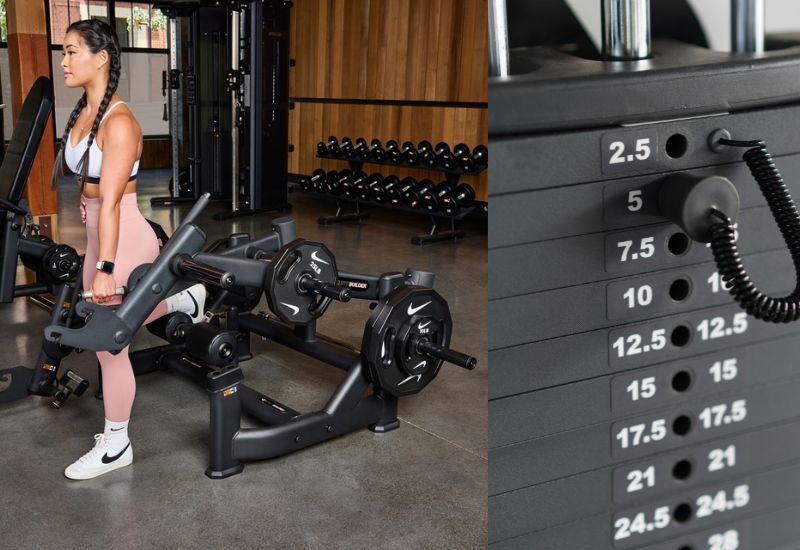
Plate loaded equipment uses weight plates that users load and unload manually.
Examples include:
- Plate loaded chest presses
- Hack squats
- Leg presses
- Shoulder presses
- Row machines
These machines are popular in strength-focused environments because they often provide a more natural movement pattern and allow for significant loading.
Plate loaded equipment is commonly found in:
- Athletic performance centres
- University training facilities
- Powerlifting environments
- High-performance strength facilities
- Specialized training gyms
For experienced users, plate loaded equipment can feel intuitive and provide nearly unlimited progression opportunities.
What Is Selectorized Equipment?
Selectorized equipment uses a weight stack and pin system to adjust resistance.
Examples include:
- Lat pulldowns
- Leg extensions
- Seated rows
- Chest presses
- Cable stations
Selectorized equipment has remained a staple of commercial fitness facilities because it is approachable, easy to adjust, and accessible for a broad range of users.
You’ll often find selectorized equipment in:
- Condominium fitness centres
- Corporate fitness facilities
- Hotels
- Recreation centres
- Community fitness facilities
- Active aging environments
For many exercisers, selectorized equipment provides a lower barrier to entry and requires less instruction to use safely.
The Real Question: Who Will Be Using the Space?
The best equipment selection depends on the people using the facility.
Consider a condominium fitness centre.
Residents may range from first-time exercisers to experienced strength athletes. Some may be exercising independently without any staff supervision.
In this environment, selectorized equipment often provides significant advantages because adjustments are quick, learning curves are lower, and users can begin exercising with minimal instruction.
Compare that with a university athletic facility or private performance centre where athletes train under supervision and regularly follow structured strength programs.
In those environments, plate loaded equipment may be the better choice because it supports heavier loading, athletic development, and more advanced training methodologies.
The equipment itself isn’t inherently better.
The context determines whether it’s the right solution.
The Overlooked Factor: Throughput
One of the most important concepts in facility design is throughput.
Simply put:
How many people can comfortably use the facility during busy periods?
This is where many facility planners unintentionally create bottlenecks.
A common assumption is that multi-function or dual-function selectorized machines are always the most efficient use of space.
On paper, the logic makes sense.
If one machine provides two exercises, you’re getting more functionality from a smaller footprint.
However, busy facilities often reveal a different reality.
When a user performs two exercises on the same machine, they typically remain at that station longer. During peak periods, that can lead to increased wait times and reduced equipment availability.
A machine that serves more exercises does not necessarily serve more people.
In high-demand environments, facility throughput can be more important than maximizing the number of movement patterns listed on an equipment specification sheet.
This is one reason fitness facility design should never be based solely on square footage or equipment counts.
It should be based on how people actually move through and use the space.
Why Most Commercial Facilities Benefit from Both
In our experience, the best facilities rarely choose all plate loaded or all selectorized equipment.
Instead, they leverage the strengths of both.
A balanced approach might include:
Selectorized Equipment For:
- New exercisers
- Rehabilitation and controlled movements
- Inclusive fitness environments
- Active aging populations
- Unsupservised facilities
- Quick equipment transitions
Plate Loaded Equipment For:
- Strength development
- Athletic training
- Experienced exercisers
- Progressive overload
- Specialty lower-body and upper-body movements
This approach allows facilities to accommodate a wider range of users without forcing every exerciser into the same training style.
Common Facility Recommendations
Condominiums and Apartment Gyms
Most residents are looking for convenient, approachable equipment.
Recommended approach:
- Primarily selectorized strength equipment
- Functional training stations
- Dumbbells and benches
- Limited plate loaded pieces where appropriate
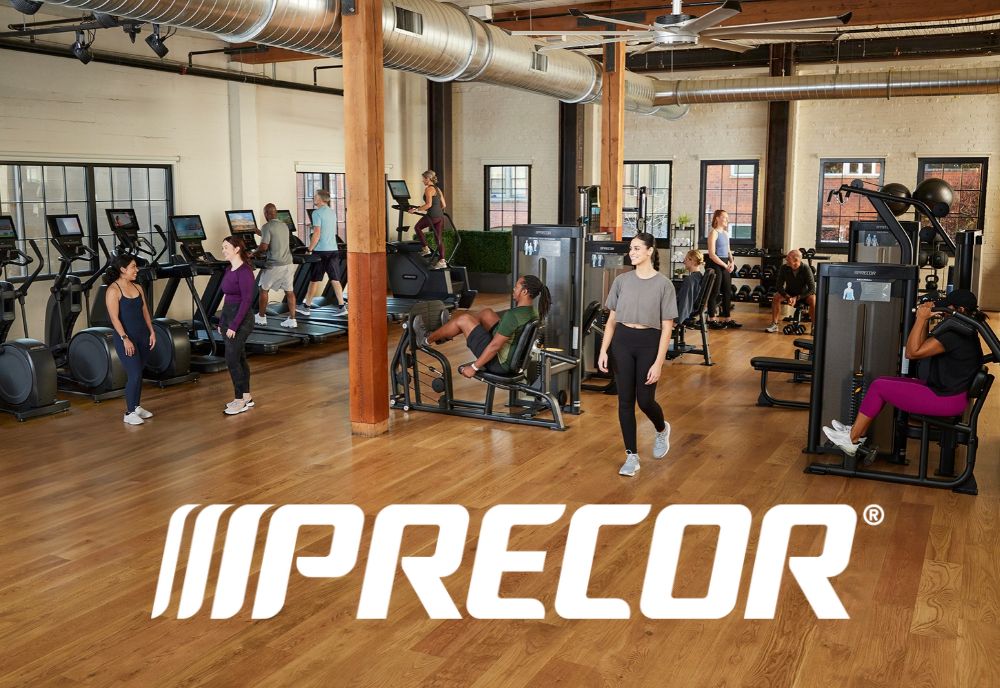
Equipment commonly considered for this environment includes product lines such as the Precor Vitality Series, Freemotion Epic Series, and RawX selectorized equipment paired with a functional trainer and free weight area.
Corporate Fitness Centres
User experience and accessibility are usually priorities.
Recommended approach:
- Selectorized equipment
- Functional training areas
- Adjustable cable stations
- Moderate free-weight offering
Popular choices often include Precor Vitality Series strength equipment, TRX functional training systems, and Keiser pneumatic resistance equipment for organizations seeking approachable, low-maintenance solutions
Recreation Centres
Recreation facilities often serve the broadest range of users.
Recommended approach:
- Balanced selectorized and plate loaded mix
- Functional training zones
- Sufficient throughput for peak periods
- Equipment suitable for both beginners and experienced exercisers
Many recreation facilities combine selectorized lines such as Precor Discovery or Vitality Series with Defiant plate loaded equipment, Keiser cardio, and dedicated functional training zones.
Athletic and Performance Facilities
Training outcomes typically take priority.
Recommended approach:
- Greater emphasis on plate loaded equipment –
- Racks and free weights
- Specialty strength equipment
- Functional performance spaces
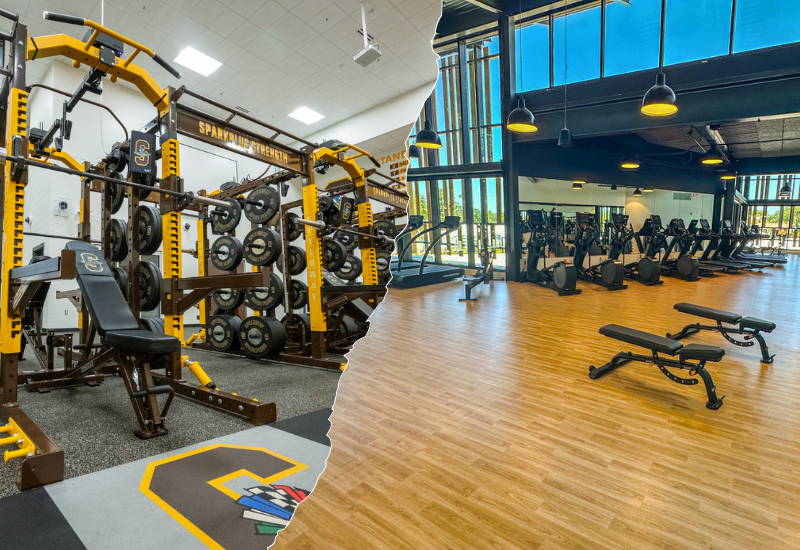
High-performance environments often favour Precor plate loaded equipment, the Glutebuilder line in particular, Dynamic Fitness & Strength racks and rigs, Woodway treadmills, and specialized strength training platforms designed for athletic development.
Designing for People, Not Equipment Categories
The plate loaded versus selectorized debate can be helpful, but it often distracts from the bigger objective.
Your facility isn’t being judged by the type of equipment it contains.
It’s being judged by how well it serves its users.
The best commercial fitness facilities are designed around the people who train there, the staff who support them, and the operational realities of the environment.
That means considering:
- User demographics
- Training goals
- Facility supervision
- Peak-hour congestion
- Accessibility
- Long-term flexibility
- Equipment durability
When those factors drive the conversation, equipment decisions become much clearer.
Need Help Planning a Commercial Fitness Facility?
Beyond the Basics helps developers, condominium boards, recreation centres, hotels, corporate fitness facilities, educational institutions, and fitness operators throughout Alberta, British Columbia, Saskatchewan, and Manitoba create fitness spaces that perform for years to come.
Our consultative approach focuses on facility layout, equipment selection, traffic flow, durability, accessibility, and long-term operational success.